
Weatherboard house painting in West Auckland
Timber or fibre-cement, 1960s bungalow or 1990s two-storey: Chris and the team wash, scrape, repair and prime before a drop of topcoat goes on. Chris quotes it on site, usually the day after you call.
- Quote
- Free, on site, fixed price
- Visit
- Chris, usually the next day
- Member
- Master Painters NZ
- Eco
- Resene Eco.Decorator
“They did an excellent job, very happy”
- Free on-site quote, fixed price
- Visits usually the next day
- Quote within two days
- Master Painters NZ member
- Resene Eco.Decorator
Coat by coat on a weatherboard house
The same five steps on every weatherboard repaint, in this order. Fibre-cement boards follow them too, with a sealer where timber gets primer.
Wash and treat the mould
Mould and lichen are killed first, then the boards get a scrub wash that lifts chalk and dirt without gouging the timber.
Your mould: the shady side gets the mould treatment first.
Scrape and sand
Loose and flaking paint is scraped off and the edges sanded back, so the new coats lie flat.
Your flaking paint: scraped and sanded back to a firm edge.
Repaircare the soft timber
Rot is cut back to sound wood and moisture-tested, and it has to read under 17% before it’s rebuilt with Repaircare epoxy. Bad sections are cut out and a new piece spliced in.
Your soft boards: moisture-tested, then Repaircare or a spliced-in piece.
Prime the bare timber
Every bare and sanded patch is primed before the evening dew can lift its edges.
Two topcoats
Two full coats in your colour on the boards, windows, fascias and soffits.

ChrisHome Shield Painters
House painting across West Auckland, by Chris and the team at Home Shield Painters.
Who you deal with
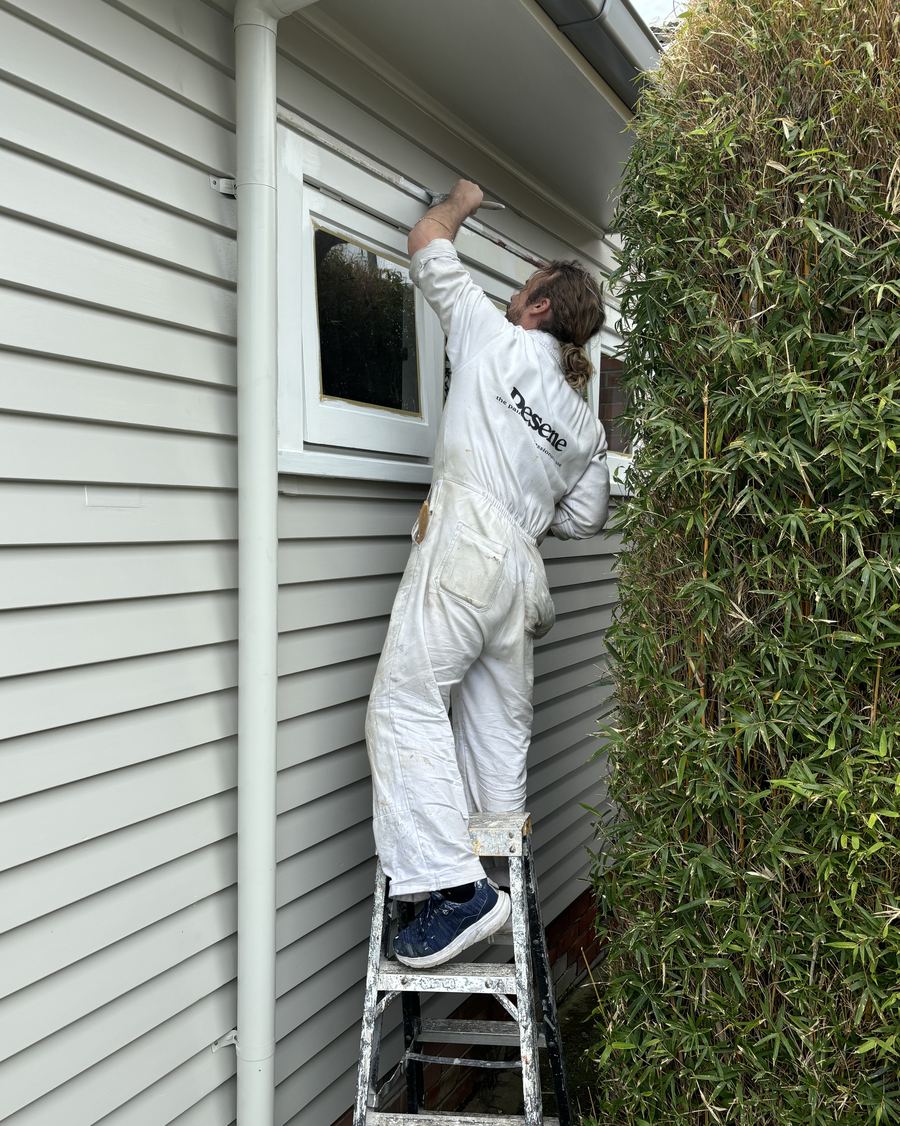
Chris is the one who comes out, looks over your house and quotes it, and he runs the job from that first visit to the follow-up. Chris and the team do the prep and the painting.
His base is out west, and West Auckland’s weatherboard and plaster homes are everyday work for the team.
- Master Painters NZmember
- Resene Eco.Decoratorapproved
- Mon–Sat7:30 am–4:30 pm
- Quotesfree, fixed price
Timber and fibre-cement boards, both covered
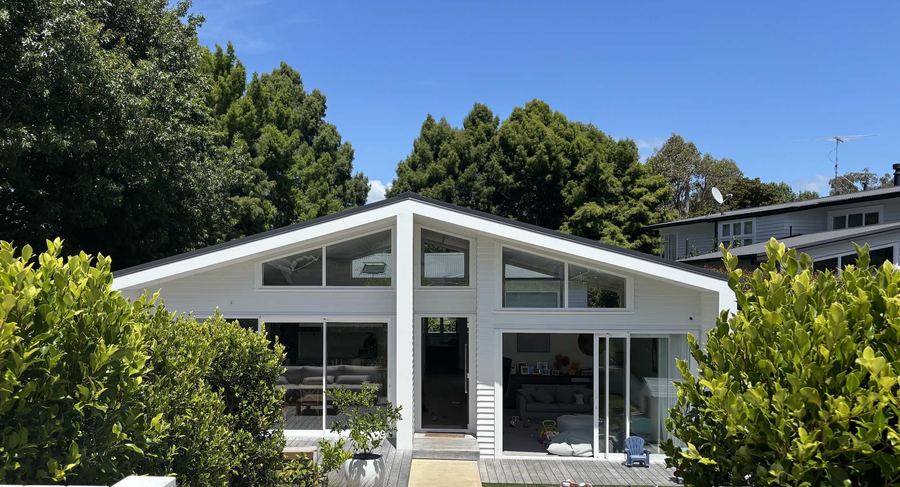
Most of West Auckland’s houses are weatherboard. Glen Eden is full of post-war weatherboard homes, Green Bay’s typical house is a 1960s-style weatherboard bungalow, Te Atatū filled up with family homes through the 1960s and 70s, and West Harbour came later, in the 1980s and 90s.
Timber boards and fibre-cement boards look alike from the street, but they don’t prep alike. Timber gets sanded, repaired and primed; fibre-cement gets filled and sealed. Chris checks which you have when he comes out, and the quote covers the system that suits your boards.
- House wash and mould treatment
- Scraping and sanding of failed paint
- Repaircare on soft timber, or a spliced-in section
- Primer on bare timber, sealer on bare fibre-cement
- Two topcoats on walls, windows, fascias, soffits and downpipes
- Decks and railings on the same quote, if you like
Rot repaired before it’s painted over
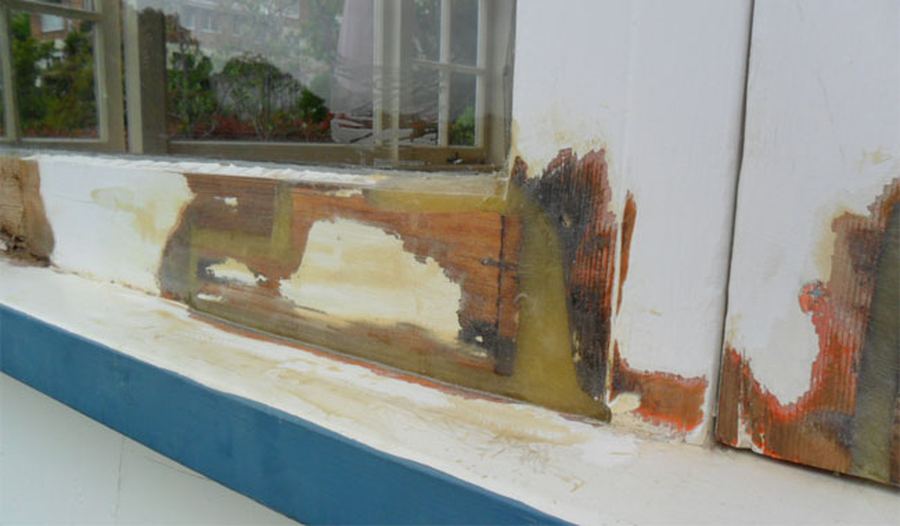
Rot hides under old paint at sills, window frames, the bottom boards and the ends of fascias. It shows up in the prep, and that’s where it gets fixed, before any primer goes near it.
Soft timber is cut back to sound wood and moisture-tested, and it has to read under 17% before it’s repaired. The repair is Repaircare, a flexible epoxy system that rebuilds the timber’s shape, so mouldings and sills can be saved rather than replaced. Where the rot runs too deep, the section is cut out and a new piece spliced in.
You see what was found and what was repaired. Nothing soft gets sealed in under a fresh coat.
John and his crew were excellent. We were kept in the loop during the refurbishing and his staff were good. We were extremely pleased with the result and would highly recommend this company.
Colours, sun and bush shade
Dark colours look sharp on weatherboards, and they run hotter in the sun, which puts more stress on the boards and the paint, especially when the new colour is darker than the old one. Many fibre-cement systems also set a lightest-colour limit for the cladding. Chris checks your boards before you settle on a colour.
On a bush section the question is often the other way round: which colours sit back into the trees. In the Waitākere Ranges Heritage Area, the council’s guide names colour and reflectivity among the things that make a house stand out from the bush. Chris can help you choose a scheme that suits the house and the section.
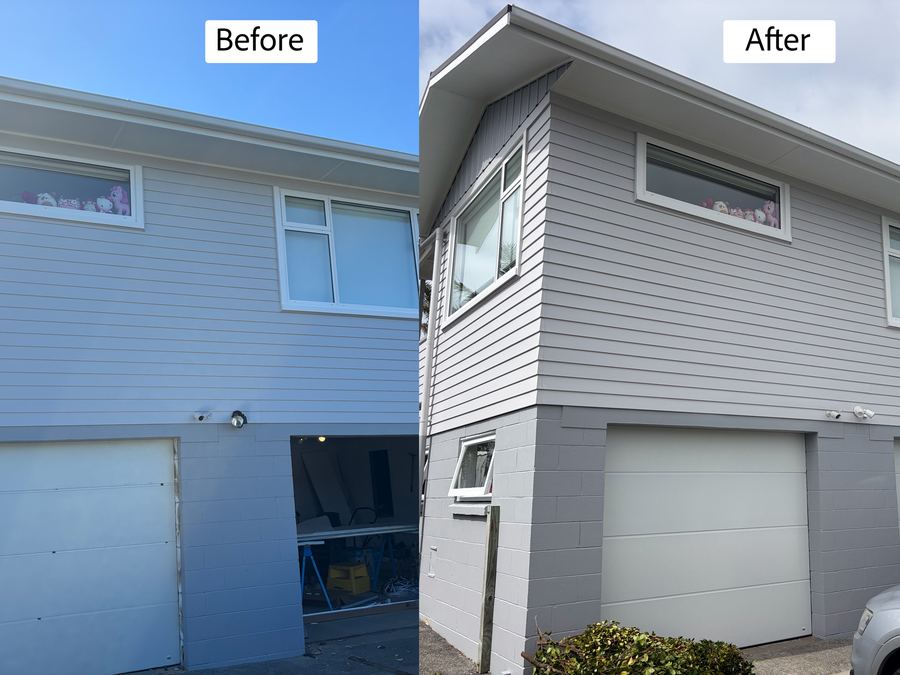
Boards upstairs, block below
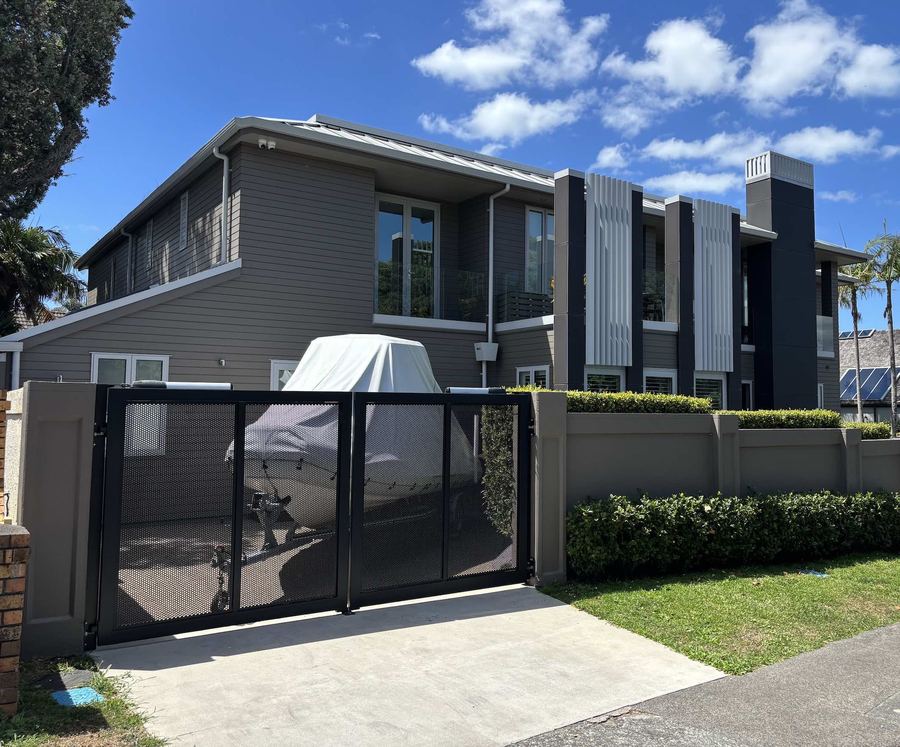
A two-storey home washed, prepped and repainted light grey, with the garage door finished white.
What sets the price
- How many storeys, and whether the job needs scaffolding
- The cladding and the state it’s in
- How much prep and repair: mould, flaking paint, rot and cracks
- Access: steep drives, bush sections, tight sides, decks and gardens to protect
- How many coats and colours, and how big a colour change
- Inside rooms and ceilings, if you add the interior
Chris comes out, looks over the house and gives you a fixed price for the job, free and with no obligation.
They did an excellent job, very happy, I will get them again if I need more painting. I would certainly recommend them. Thank you
Questions
Another question? Call 0800 166 030, or ask it on the quote form and Chris will answer it.
How often do weatherboards need repainting?
It depends on the colour, the sun and how sound the old paint was. Darker colours often need recoating in 7 to 10 years. Homes near the coast need washing and repainting more often than inland ones. Chris can tell you where yours is at when he comes out.
How do you wash weatherboards?
With a mould treatment and a scrub wash, which lifts chalk and grime without gouging the timber the way a high-pressure blast can.
Can you repaint fibre-cement weatherboards?
Yes. They’re washed to take off the chalky layer, filled where they’re chipped or cracked, sealed where bare, and given two topcoats.
Do you paint the windows and fascias too?
Yes. A full exterior repaint covers the walls, timber windows, fascias, soffits and downpipes, and decks and railings can go on the same quote.
Get a free quote for your weatherboards
Tell Chris about the house and send a photo of the worst wall. He’ll ring you to book a visit.
What helps Chris quote
- Your cladding, if you know it
- What the walls show: mould, flaking, chalky paint, cracks or soft boards
- One storey or two, and the section: bush, slope or flat
- Outside only, or inside too
- When you’d like it done
- A photo or two of the worst walls
Chris rings you back to book the visit, usually for the next day, and your fixed-price quote follows within two days.
Thanks, we’ve got your details.
Chris will ring you to book a visit and look over the house. If you’d rather talk now, call 0800 166 030.