
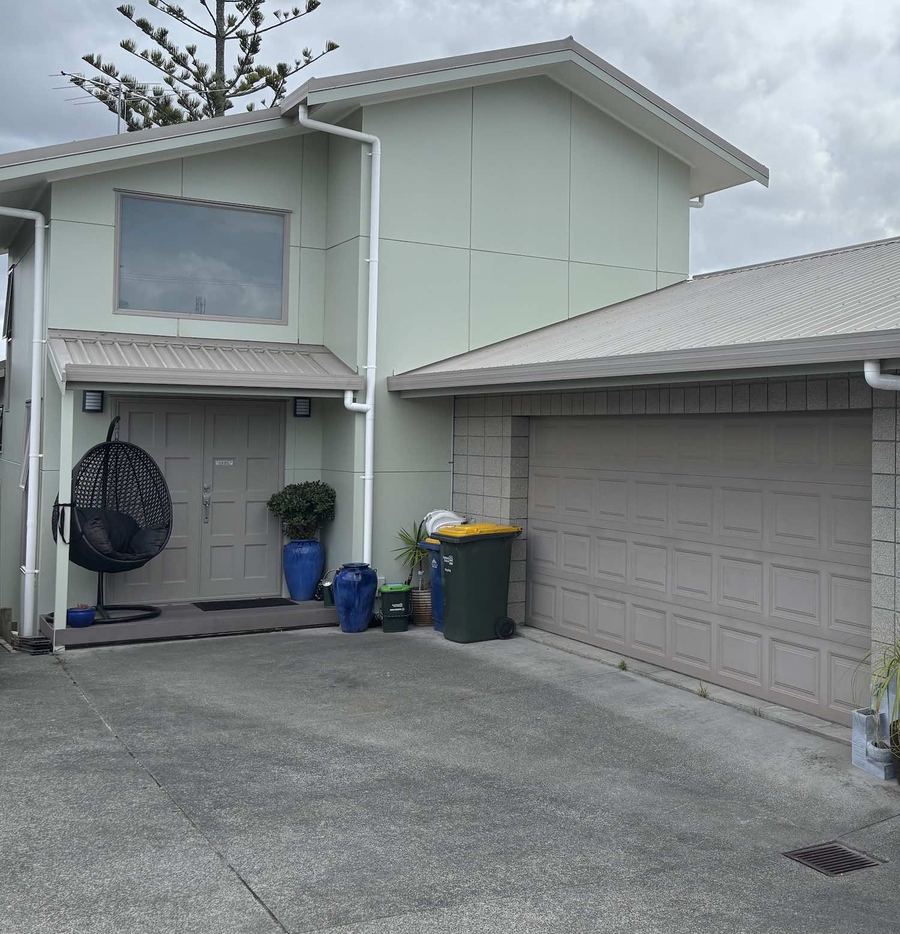
Plaster, Texture-Coat and Block House Painting in West Auckland
Hairline cracks in the plaster, or mould settling into the texture? Plaster, texture-coated sheet and block keep the weather out with their paint, so we repair the cracks, wash off the mould, seal and recoat until the coating does that job again.
- Quotes
- Free and fixed-price, on site
- Visit
- Usually the day after you call
- Member
- Master Painters NZ
- Paints
- Resene Eco.Decorator
“Great experience, easy to deal with”
- Free on-site quote, fixed price
- We usually visit the next day
- Your quote within two days
- Master Painters NZ member
- Resene Eco.Decorator
Each Coat on a Plaster Wall, in Order
Plaster and texture-coat walls get their own five steps. Block and painted brick go through the same order, with a masonry sealer at step four.
Wash and Treat the Mould
Texture holds dirt in its grain, so the mould and grime are treated and washed right out of it.
Your mould is treated first, starting on the shady side. Your chalky paint comes off in the wash, so the new paint grips the surface.
Scrape Back Anything Loose
Blistered or loose coating is scraped back to a sound edge.
Repair the Cracks
We open the cracks up and fill them so they don’t show back through, and make good any damaged patches.
Your cracks are opened up and filled before anything is sealed.
Seal
Repairs and bare patches are sealed so the finish comes out even.
Two Topcoats
Two full coats, with a membrane-type topcoat where hairline cracks keep coming back. These claddings rely on their coating to stay weathertight.
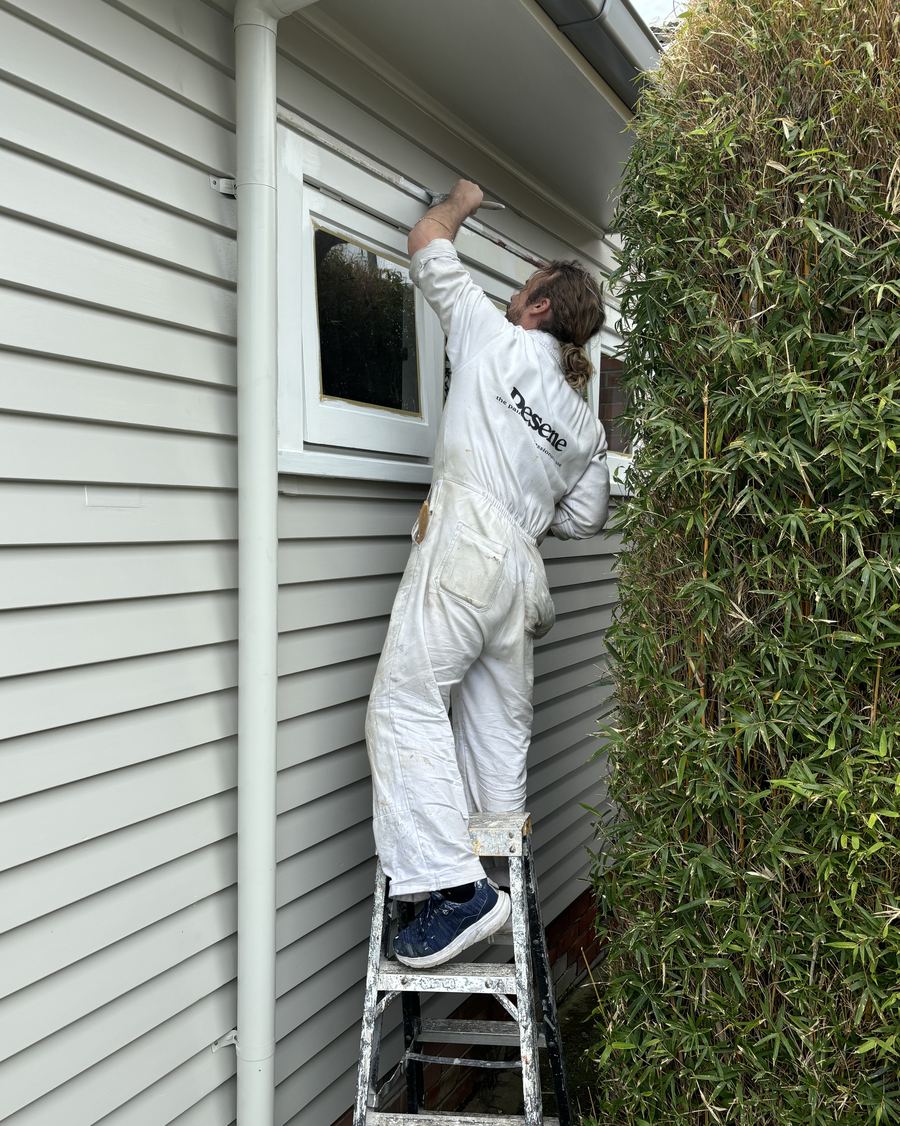

ChrisHome Shield Painters
House painting across West Auckland, by Chris and the crew at Home Shield Painters.
One Contact for Your Plaster Repaint
Chris quotes your job on site and stays your contact until it’s finished, and our crew does the prep and the painting.
We’re based out west, and weatherboard and plaster homes like yours are the houses we paint day in, day out.
- Master Painters NZmember
- Resene Eco.Decoratorapproved
- Mon–Sat7:30 am–4:30 pm
- Quotesfree, fixed price
Why a Plaster House Needs Its Paint Kept Up
Stucco, solid plaster, texture-coated sheet and the insulated plaster systems all rely on their coating to keep moisture out, and they need it kept up to stay weathertight. When a crack is left open or a coat wears thin, water gets into the wall and does its damage where you can’t see it.
Many West Auckland homes from the late 1980s to the early 2000s were built with claddings that relied on the paint finish as the main defence against water. On those houses a repaint is more than a colour change. We fill every crack, seal every wall and put on two full topcoats.
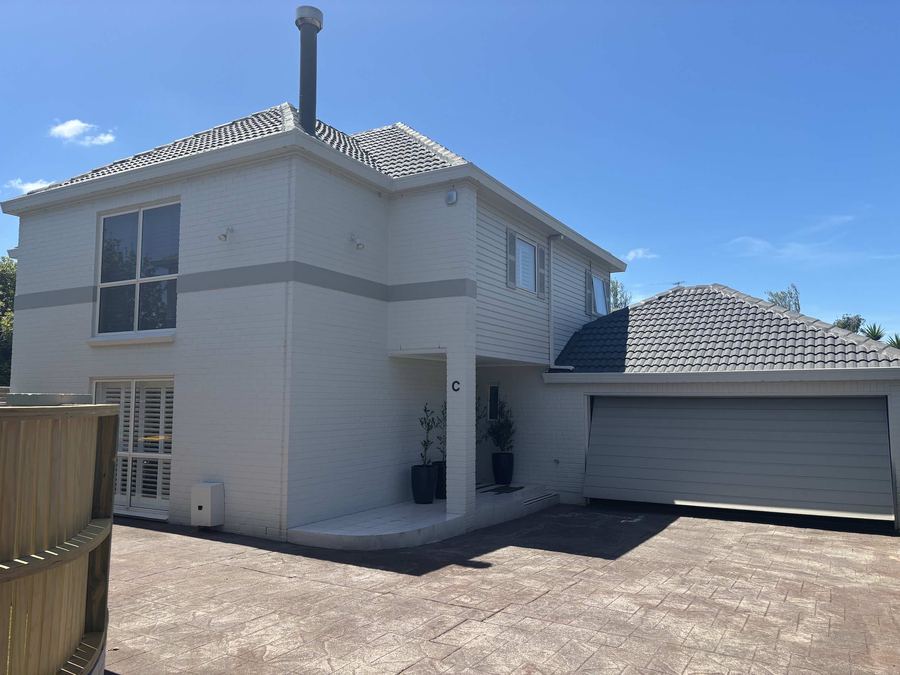
Plaster Cracks, Opened Up and Filled
Hairline cracks are opened up and filled so they don’t show back through the new paint, and bigger damaged patches are cut back and made good before anything is sealed. If fine cracks keep coming back, we use a membrane-type topcoat, a coating made to bridge them.
The wash comes first, because texture holds grime and mould in its grain. The sealer and the topcoats need a clean, dry and sound surface to bond to.
- Mould treatment and a thorough wash
- Loose and blistered coating scraped back
- Cracks opened and filled, damaged patches made good
- Sealer over the repairs and bare patches
- Two topcoats, or a membrane-type coat where cracks return
Painting Block Walls and Brick
Block garages, retaining walls and the block lower storey of a split-level all go on the same job. Old blockwork gets a masonry sealer first, which helps stop salt staining and cuts down how much paint the block soaks up. Then it gets two topcoats, or three for strong reds and yellows.
Brick that’s been painted before gets the same wash, crack filling and sealer before its coats, so it finishes evenly with the weatherboards above it.
Very friendly & professional
High quality 🤗
Why Texture-Coat Suits Lighter Colours
Plaster and texture-coat systems are sensitive to heat. Dark colours soak up the sun and the heat moves the cladding underneath, which shows up later as hairline cracking and fading. Many systems set a lightest-colour limit, and some call for a special heat-reflective coating below a certain shade.
We check what your walls are clad in before you pick a colour, so the finish suits the system as well as the house.
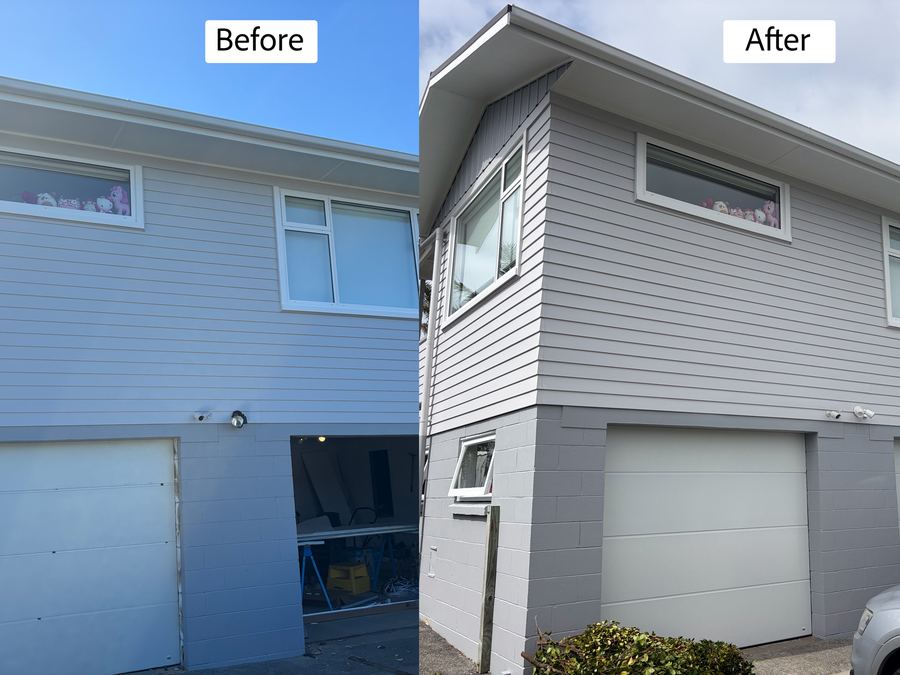
Block Sealed, Boards Repainted
The block garage and the weatherboards above it were done in one job. We sealed the block first and finished it a shade darker.
Pricing a Plaster or Block Repaint
- How many storeys, and whether the job needs scaffolding
- Your cladding and the state it’s in
- How much prep and repair the mould, flaking paint, rot and cracks call for
- Access, from steep drives and bush sections to tight sides and gardens to protect
- How many coats and colours, and how big the colour change is
Once we’ve looked at the walls and the cracks, we price the whole job at one fixed figure. The quote is free, with no obligation.
Great experience, easy to deal with & got the job done really fast.
What People Ask About Plaster and Block
Something we haven’t covered? Ring 0800 166 030, or put your question in the quote form and we’ll answer it when we call.
Do you repaint monolithic and texture-coated homes?
Yes. We wash the walls, fill and seal the cracks, then apply two full topcoats chosen to suit the cladding system.
Will the cracks show through the new paint?
We open the cracks up and fill them before sealing so they don’t show back through, and where fine cracks keep coming back, a membrane-type topcoat bridges them.
Do you paint concrete block walls and retaining walls?
Yes. Block is washed, filled and given a masonry sealer, then two topcoats.
Can we change the colour of our plaster house?
Yes, within your cladding system’s colour range. Many plaster and texture-coat systems set a lightest-colour limit, because dark colours heat the cladding. We check your system and show you the colours that work on it.
Ask Us to Look at Your Plaster Walls
Tell us where the cracks or the mould are worst, and send a close-up of them. We’ll ring to book a visit.
Useful for Your Quote
- Your cladding and how many storeys
- What the walls are showing, such as mould, flaking or soft boards
- Whether the section is bush, sloping or flat
- Outside, inside or both, and roughly when
- Photos of the walls in the worst shape
Once your details arrive, we’ll ring to set a time to see the house, which is usually the next day. Your fixed-price quote reaches you within two days.
Thanks, That’s Come Through
We’ll call to arrange a time to come out and look over the house. To talk sooner, ring 0800 166 030.